How to Memorize the 99 Names of Allah (Asma ul-Husna)
Memorizing the 99 Names of Allah (Asma ul-Husna) is a meaningful act of worship. The Prophet Muhammad (peace be upon him) said: "Allah has ninety-nine names; whoever memorizes them will enter Paradise." (Bukhari & Muslim). This guide gives you a practical, repeatable method that works whether Arabic is your first language or not — using the Azkar app as your daily companion.
Why most memorization attempts fail
Trying to learn 99 names in one sitting, reading them once, or relying on passive recognition instead of active recall all lead to the same outcome: most of the names slip away within a few weeks. The method below avoids those three pitfalls by doing the opposite: small batches, active recall, and spaced repetition.
The method in one sentence
Learn 10 names per week. Review previous batches daily. Use audio, meaning, and the Quranic reference for each name. Stop when recall is automatic.
Step-by-step memorization plan
Group the names into blocks of 10
Ten blocks of ten, with the final block of 9, gives you a clear ten-week plan. Smaller chunks keep each session under 10 minutes and let you notice when recall is getting shaky.
Learn pronunciation first
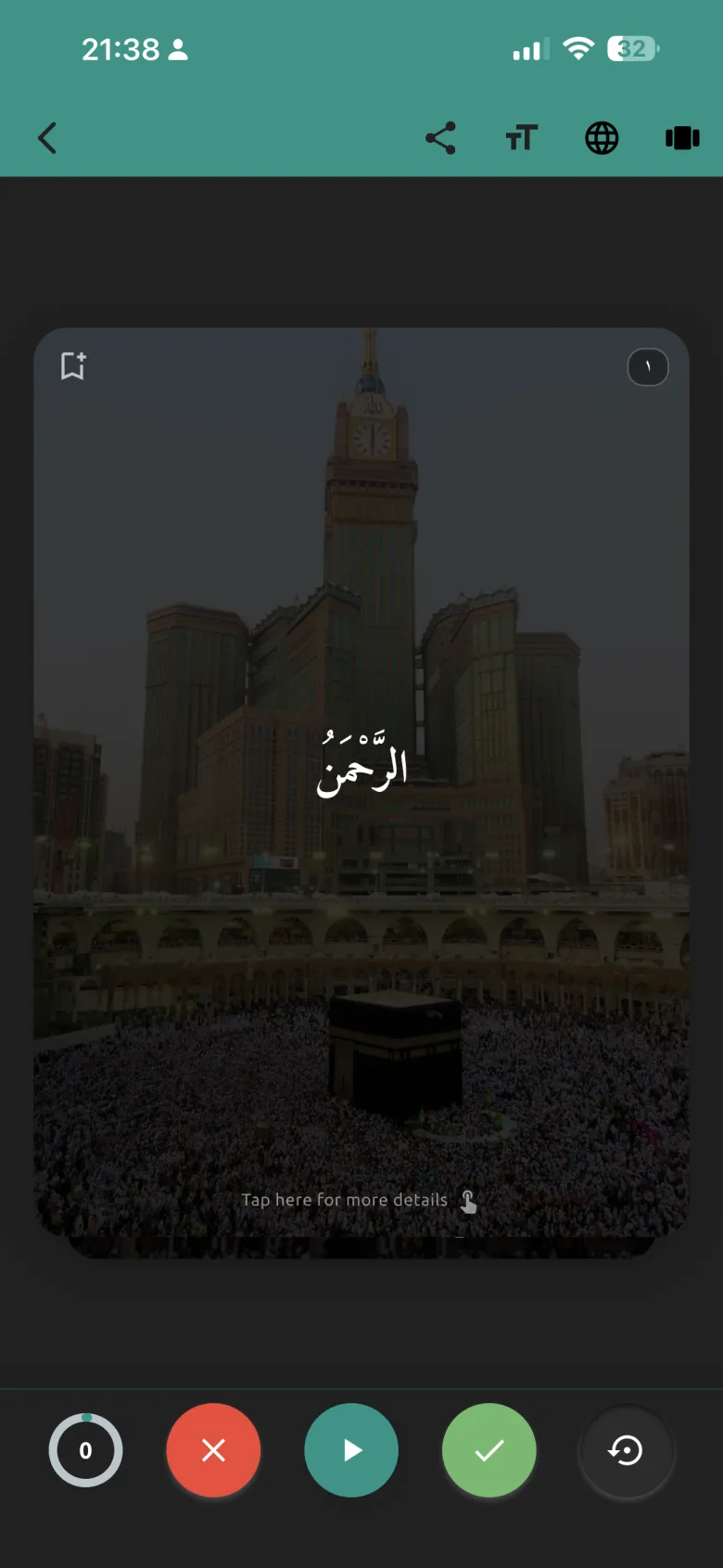
Open the 99 Names section in the Azkar app. For each name, tap the audio pronunciation button and repeat the name out loud 3–5 times. If you don't read Arabic, don't worry — learn by sound first. The transliteration helps.
Link each name to its meaning
Read the English (or your language) meaning and definition. Close your eyes and try to recall both the Arabic name and its meaning in your own words. This is active recall — the single most important memorization technique.
Example: Ar-Rahman (The Most Merciful) — close your eyes and say: "Ar-Rahman — the One whose mercy encompasses all of creation."
Read the Quranic reference
Each name appears in at least one verse of the Quran. Reading that verse connects the name to a real context and makes it stick. The app shows the reference for every name.
Apply spaced repetition
Review the batch after 1 day, 3 days, and 1 week. Use the app's built-in scoring system: mark names you know instantly as confident, and focus review time only on the names you hesitate on. This is the same technique used in language-learning apps — and it works.
Add a new batch each week
In week 2, start the next 10 names while still reviewing week 1 daily. By week 10 you will have covered all 99 names. Continue reviewing every few days until recall becomes automatic, even when you're not looking at the app.
Tips that actually matter
- Say the name out loud. Hearing your own voice triples retention versus reading silently.
- Teach someone else. Explaining a name to a family member or friend exposes gaps instantly.
- Review on the go. Use spare moments (commuting, waiting in line) to run through the names mentally.
- Bookmark the difficult ones. Azkar's bookmark feature lets you build a personalized "struggle list" for extra review.
- Don't skip review days. Consistency > intensity. Ten minutes every day beats one hour once a week.
Common obstacles and solutions
"I don't read Arabic"
Many users start from zero Arabic. The combination of audio pronunciation + transliteration + meaning works well without any Arabic reading ability. Over time, your ear trains your eye; many learners find they can recognize the Arabic script after a few weeks.
"I forget the ones I learned last month"
That's what spaced repetition is for. Stop trying to move forward — spend a full session reviewing only the names you've forgotten. Then resume adding new ones.
"I keep confusing similar names"
Names like Al-Aleem, Al-Khabeer, and Al-Hakeem all relate to knowledge but have distinct shades of meaning. Write each on a card with a one-sentence distinguishing definition: "Al-Aleem — knows everything; Al-Khabeer — knows all inner secrets; Al-Hakeem — all-Wise, places everything in its right place."
Beyond memorization: understanding the names
Memorization is the first step; contemplation is the next. After learning each batch, spend a few minutes reflecting: How does this name of Allah apply to my life right now? For example, knowing Allah is Al-Ghafur (The Oft-Forgiving) can bring peace when dealing with guilt; knowing He is Ar-Razzaq (The Provider) can relieve anxiety about provision.
Start your journey with Azkar
Free interactive 99 Names cards with audio, meanings, Quranic references, and a scoring system. No ads, no subscriptions.